“I am overwhelmed, I had no idea”, an emotional William Shatner told Amazon and Blue Origin founder Jeff Bezos, “I am so filled with emotion at what just happened, it’s extraordinary. I hope I never recover, that I can maintain what I feel now. I don’t want to lose it. It’s so much larger than me and life.” Before being interrupted by Jeff Bezos champagne antics, William Shatner went into a very profound reflection on what he witnessed by being the oldest man in history to go into space last week, and yet I was struck by both the depth of what he had to say and the emptiness of what he had to say.
One of the few positive headlines these last few days have been about Captain Kirk from Star Trek lore becoming an actual space traveling legend, and as a huge William Shatner fan myself, I was caught up in the excitement and euphoria of the moment. Following Shatner’s career and interviews over the years, I know he has been contemplating his mortality and the meaning of life for some time now, so I was curious to hear how this moment of getting a view of our planet and the cosmos that only a select few have gotten in all human history, may have impacted what he believes and how he sees the world. Clearly this moment has impacted Shatner, and many of his words were moving, but I also was disappointed with what he didn’t say.
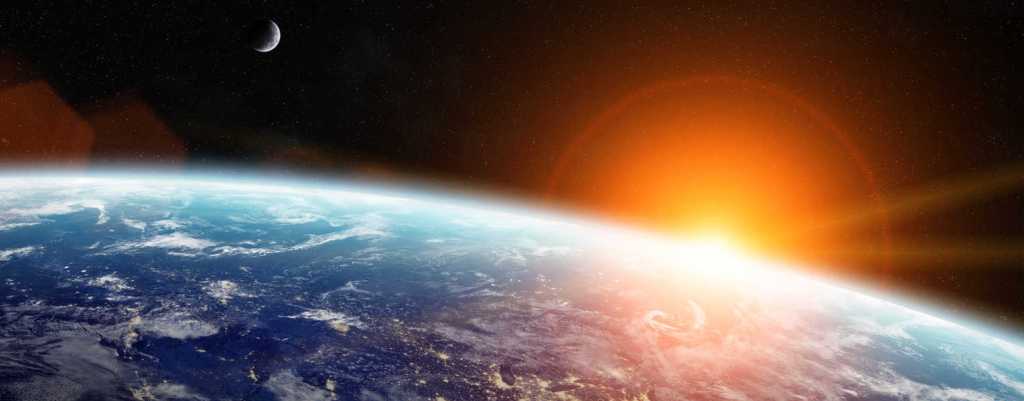
“The vulnerability of everything, it’s just so small”, Shatner exclaimed to Bezos, and he proceeded to talk about how incredible the thin atmosphere that makes life even possible on our planet is, and how much a “miracle” our planet and life on it is. Shatner is right, our planet is precious, vulnerable and the various factors that are so intricately balanced should bring wonder and awe from all of us, but not to our planet itself, or to ourselves or to nature itself: But rather to the Creator who displays His power and wisdom through all that has been made. “The heavens declare the glory of God” (Psalm 19:1).
The cosmos is telling us that there is a God, and the truth is, deep down, we all instinctively know that. The choice we must make is whether we will acknowledge what is clearly seen or choose to be illogical about what space tells us, and there is nothing more illogical than choosing to believe all of life and the universe are the result of an unguided natural process. What would Spock say?
“This is life and that’s death, in an instant you go, ‘woah that was death!”, Shatner said to one of the wealthiest men on the planet. One of the biggest takeaways from what affected Shatner the most from his brief trip to the stars was the realization that within seconds of seeing blue and life, his spacecraft was immersed into the darkness and lifelessness of space, and it made him wonder if that contrast is what it will be like to go from life to death. Is that how it works? All of us wonder about it, all of us are curious about what lies beyond the grave, and all of us do our best to ignore the inevitability of facing the great unknowns of death.
Yet, the Bible tells us that all of us also have an inner longing for more than being puffed out of existence after a handful of years. We search for meaning to our existence, we yearn for unfailing love, and we live in fear of death. God has “set eternity in our hearts (Ecclesiastes 3:11) because we were made in His image, and we will live forever, the only question is whether we live forever with Him or apart from Him. We can face death with dread, or we can face it with hope, which every person who trusts in Jesus Christ personally gets to experience. There is a light in the darkness of death because of an empty tomb 2,000 years ago. Death doesn’t have to be bleak or hopeless or final. Death doesn’t have the last word.
Mr. Shatner emerged from his trip to Space with a sense of urgency for all of us down here to remember how fragile our planet is and therefore to encourage us to take care of the environment, to do good to each other, but what I’d add is that we should remember that life on this planet is a miraculous gift that is only possible because of the sustaining power of God, and our response to the gift of existence should be to worship Him, to love Him and to love each other.
Human beings have always had curiosity to look up and marvel at the wonders of the universe, but those wonders are meant to point the way to knowing a wondrous God, and it would be a tragic shame to fail to recognize the cosmic directional signs pointing toward Him. As Isaac Newton once said, “The most beautiful system of the sun, planets and comets, could only proceed from the counsel and dominion of an intelligent and powerful being.” The same intelligent and powerful being who arrayed the innumerable stars and galaxies in the heavens knows you by name and he has it engraved on the nail scarred hands with which he willingly offered his life as a sacrifice.
The real wonder is not even in the cosmos, it’s that the One who made the cosmos cares about you and me. I’m happy for you Mr. Shatner that you got to go up to space, and I’m glad there were no gremlins outside the window (I had to insert a Twilight Zone reference somewhere), my heart was moved at the words you had to say about what you saw and how it impacted you. My hope and prayer for you is that you reflect on the meaning behind the miracle. Live Long and Prosper.
“To look out at this creation and not believe in God is to me impossible.”- Astronaut John Glenn
“Know that the LORD-He is God! It is He who made us, and not we ourselves.”-Psalm 100:3
Pastor Stephen Mitchell is the Senior Pastor of Trinity Bible Church in Maryland. He also is the host of a weekly podcast, Real Christian Talk with Pastor Steve, available on all podcast platforms.

 The Pastor's Pen